Our journey through Seychelles begins on Mahé, visits nearby islands, then looks far southwest to remote Aldabra. These tropical islands occupy a vast stretch of Indian Ocean; Aldabra is a distant conservation outpost, not a routine ferry stop.
Your route
Five places, one journey
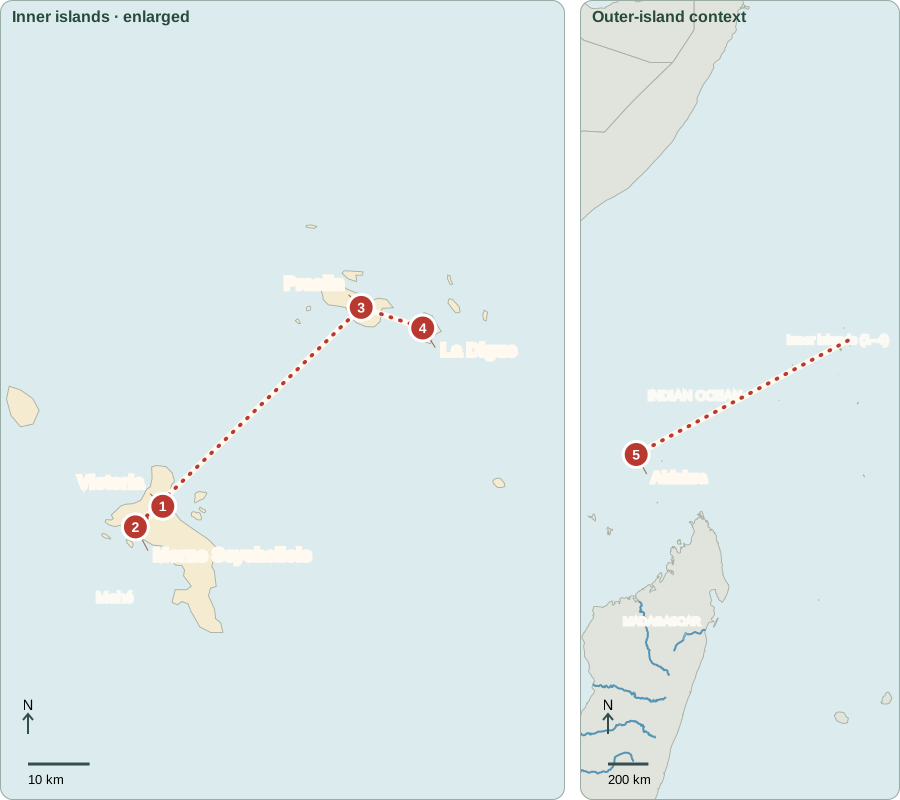
Enlarged inner islands and distant Aldabra use different scales. Other outer islands appear in context.
Victoria
A small capital with ocean links
Victoria’s markets and harbor connect Mahé with fishing grounds and overseas suppliers. Fish, rice and coconut appear in many Creole dishes. After French and British colonial rule, Seychelles became independent in 1976. Voters elect a president to direct government and a National Assembly to make laws. Citizens can choose between parties. Tourism and tuna fishing bring income, but dependence on visitors and imported goods creates risks.
Seychellois Creole, English and French are national languages. Creole culture reflects connections among people of African, European and Asian backgrounds. Markets illustrate those connections through ingredients and cooking, while everyday practices vary among households rather than following one island stereotype.
Locate this stop on the map ↗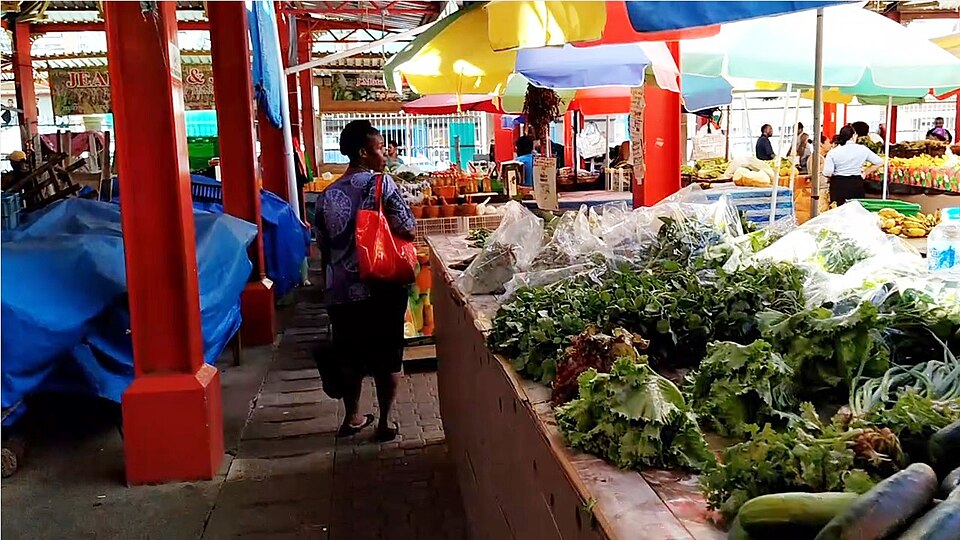
Morne Seychellois
Forest above the coast
We drive into Mahé’s steep interior. Morne Seychellois National Park protects forest high above the coast. Elevation and rainfall help support different habitats within a small area. Trees hold soil and protect water catchments that communities below depend on. Roads and settlements crowd limited coastal land, making careful land use important. Heavy rain can cause flooding and landslides even on islands surrounded by ocean.
A catchment is the land from which water drains toward a stream or reservoir. Clearing steep ground can send soil downhill during heavy rain. Forest protection therefore matters to households needing clean water, even when they live outside the park.
Locate this stop on the map ↗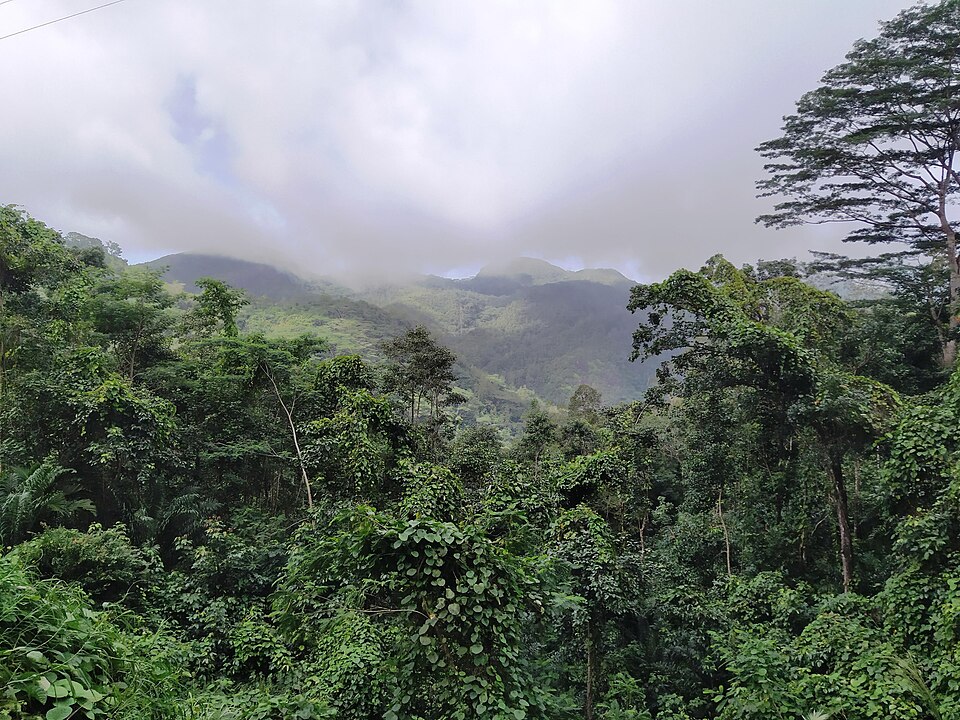
Praslin
A palm forest with unusual seeds
A ferry or flight northeast reaches Praslin. In Vallée de Mai, coco de mer palms grow enormous seeds with a distinctive double-lobed shape. Rare birds, including the Seychelles black parrot, use this forest. Protecting the habitat preserves species found in very few places. Visitor fees and guiding connect conservation with livelihoods, while invasive species and fire remain concerns.
The island’s famous seed is part of a living forest, not simply a souvenir. Collecting natural objects can harm regeneration when poorly controlled. Conserving palms also protects the habitat shared by birds and other organisms around them.
Locate this stop on the map ↗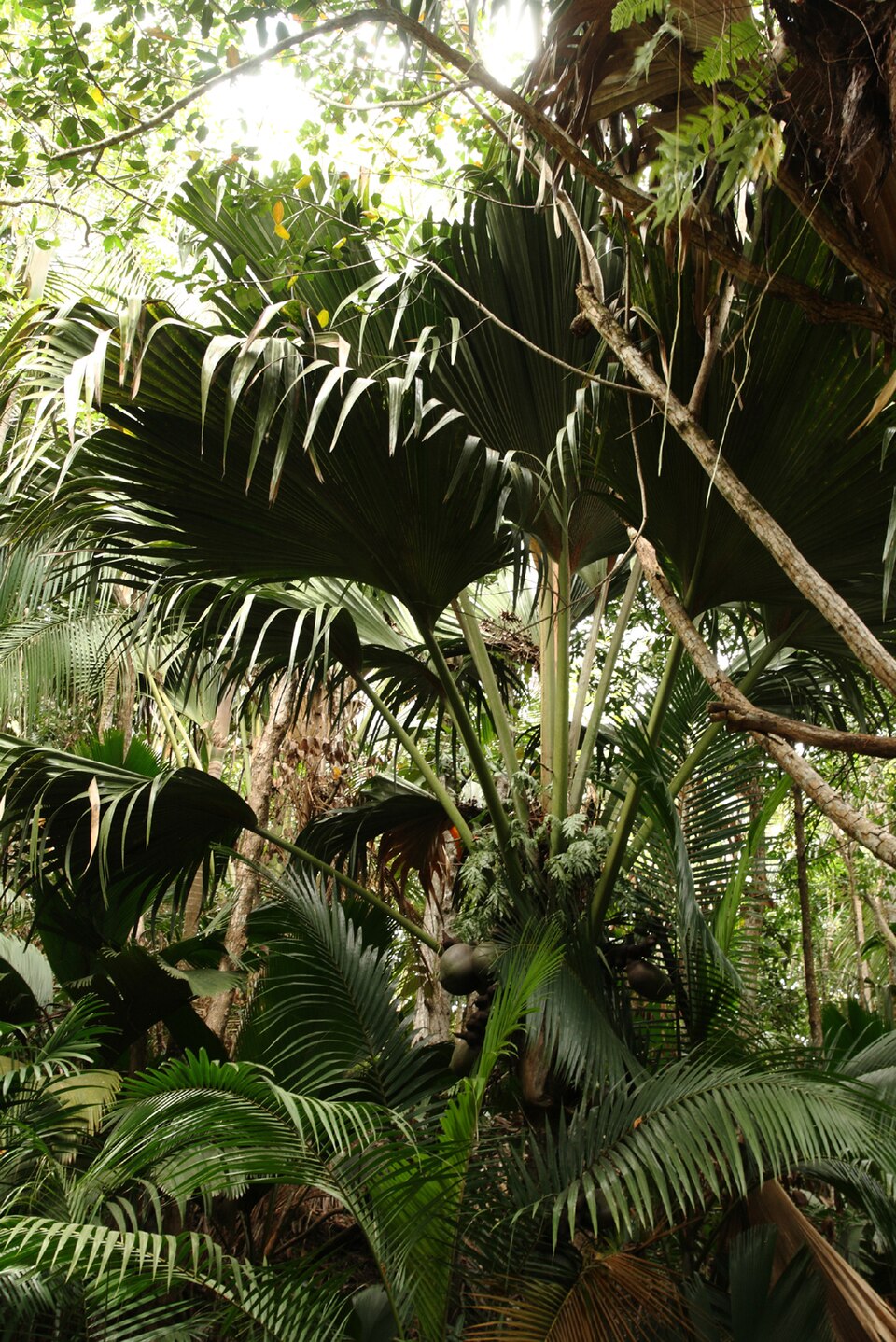
La Digue
Granite beside a sandy shore
A short boat crossing brings us to La Digue. Rounded granite boulders rise beside beaches, showing that these inner islands differ from low coral islands. Bicycles are common for getting around, and tourism supports guesthouses and restaurants. Reefs help shelter coasts and sustain marine life. Warming seas can bleach corals, weakening an ecosystem important to both fishing and tourism.
Coral bleaching happens when stressed corals lose the tiny algae that help feed them. Bleached coral is not always dead, but prolonged stress can kill it. This makes warming water an economic concern as well as an environmental one.
Locate this stop on the map ↗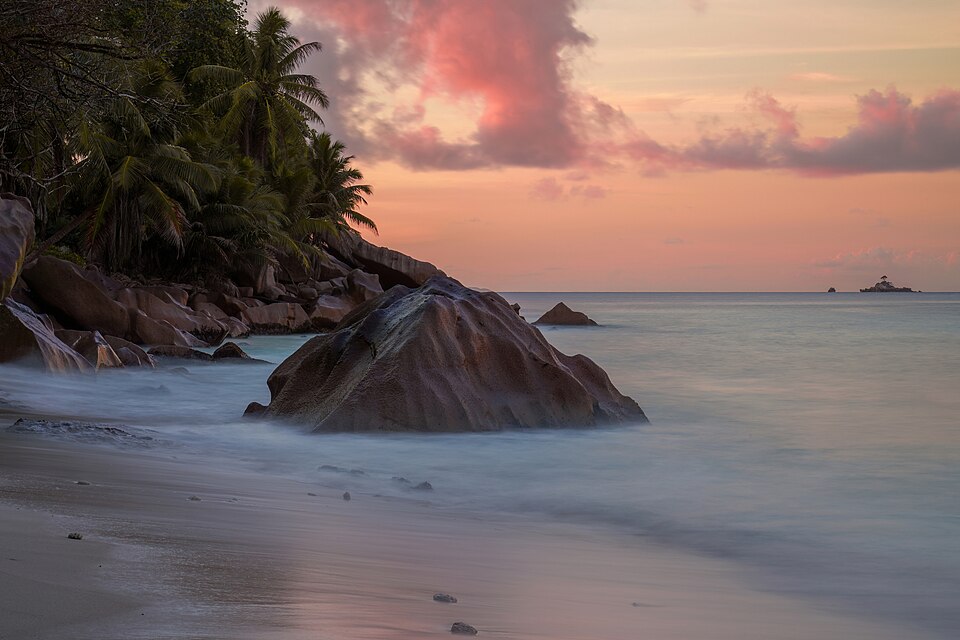
Aldabra
An atoll far from the capital
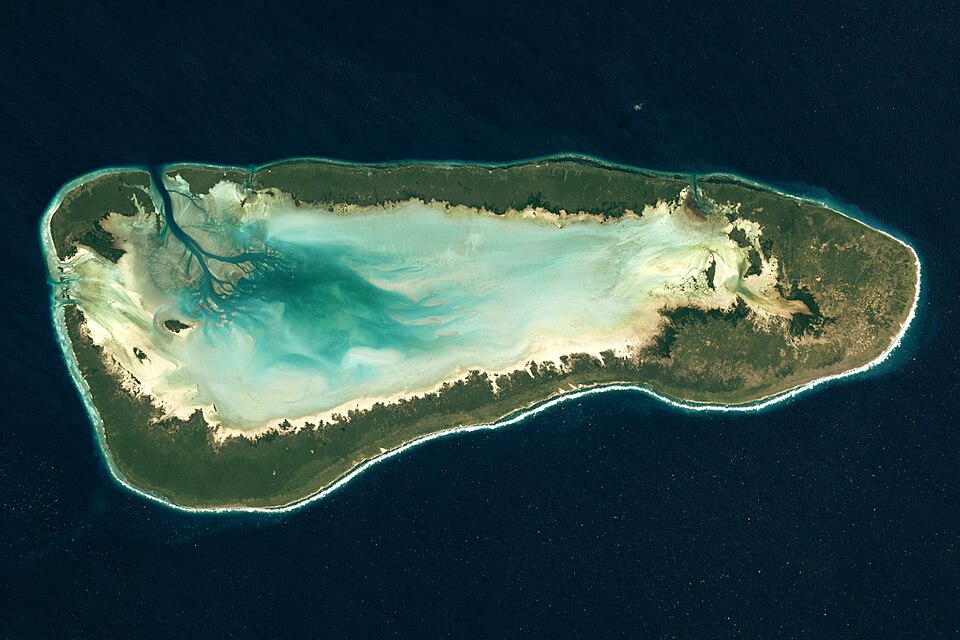
About 1,100 kilometers southwest of Mahé lies Aldabra, a raised coral atoll surrounding a lagoon. Giant tortoises graze across its land, and seabirds nest in protected habitats. Access is tightly managed, with research and conservation central to life here. Its remoteness has helped protect wildlife, but invasive species and climate change remain threats. Seychelles includes both busy inhabited islands and distant protected places.
An atoll is a ring of coral land and reef surrounding a lagoon. Aldabra’s broad, low landscape differs sharply from mountainous Mahé. A single national flag covers islands with very different geology, settlement patterns and needs for transport.
Locate this stop on the map ↗